
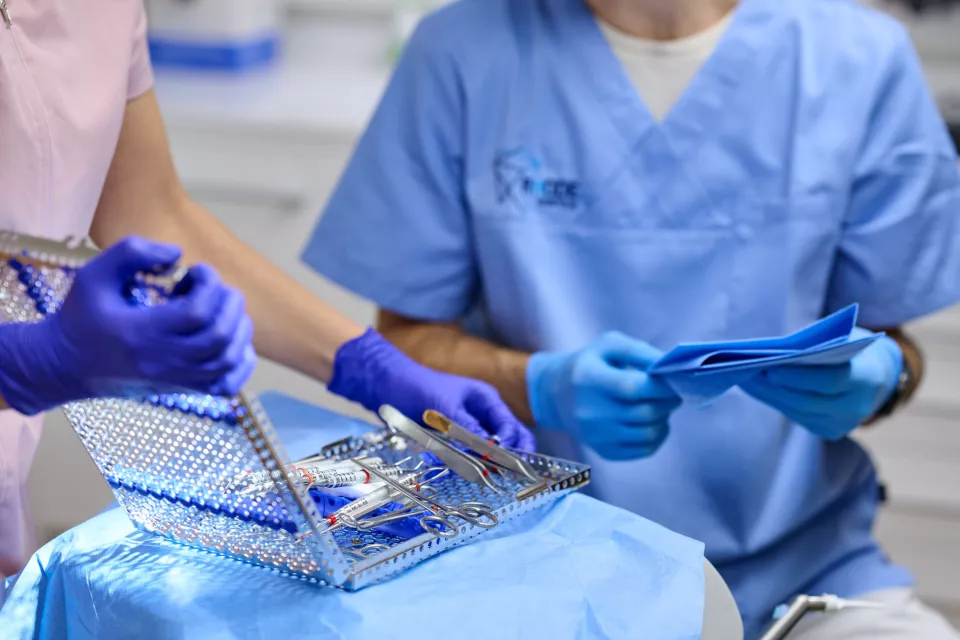
What is a Dental Implant?
A dental implant is an innovative solution designed to restore your smile and chewing function. It consists of a titanium screw placed carefully into the jawbone to replace the root of a missing tooth. This procedure allows for the attachment of a crown, bridge or stable support for a denture. Depending on your needs, the implant can be permanently fixed or removable.
One of the key features of a dental implant is the osseointegration process: a natural fusion with the jawbone. This integration ensures excellent stability and an aesthetic result similar to a natural tooth.
Another advantage of a dental implant is its ease of maintenance. Like a natural tooth, it only requires regular cleaning to stay healthy. Additionally, implants are resistant to cavities, ensuring a perfect smile and long-lasting comfort.
The implant specialist at our clinic is Leslie Germann.
How is a Dental Implant placed?
Placing a dental implant is a multi-step process that requires close collaboration between you and your dentist. Here is a general overview:
- Initial Evaluation: Before implant placement, your dentist conducts a thorough assessment of your oral health, including X-rays to evaluate the quality of the jawbone. This step is crucial to determine whether you are a suitable candidate for an implant.
- Treatment Planning: Based on the evaluation results, your dentist puts together a personalised treatment plan. This may include planning the precise location of the implant, the type of dental prosthesis to be attached and other specific details of your case.
- Implant Placement: During a surgical procedure, the dentist places the implant into the jawbone at the planned location. The implant is covered with a healing screw, after which the healing period, known as osseointegration, begins.
- Osseointegration Period: This is the phase during which the implant naturally fuses with the surrounding bone. This period can vary but usually takes several months.
- Placement of the Abutment: Once osseointegration is complete, the implant is exposed, and the abutment is attached to serve as support for the future dental prosthesis.
- Design and Placement of the Prosthesis: Finally, a custom-made dental prosthesis, such as a crown, bridge or full denture, is attached to the abutment to restore function and aesthetics.
It is important to note that each case may vary depending on the patient’s specific needs, meaning that close collaboration with your dental specialist is essential throughout the process.
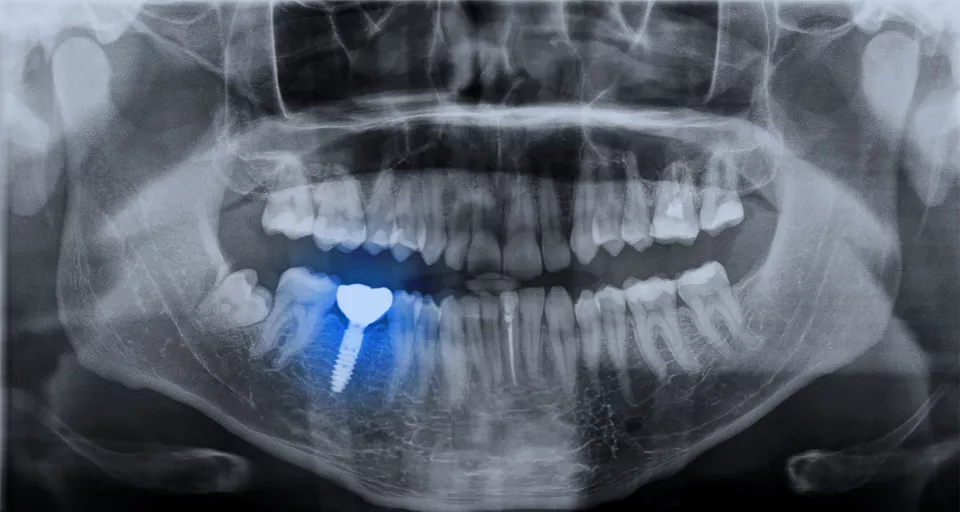
3D Panoramic X-Rays
Our clinic is equipped with a cone beam CT (CBCT). This state-of-the-art technology allows us to create a 3D panoramic X-ray of our patients’ jaws.
3D X-rays are primarily used for endodontics and dental implants.